

Europe is baking. Your laptop fan is working overtime. The coworking space you booked in Barcelona feels like a sauna by 2pm, and somehow you’re expected to be on a Zoom call looking professional.
In this guide
Meanwhile, the 2026 FIFA World Cup — running from June 11 to July 19 across the US, Canada, and Mexico — means matches are streaming at all hours. Early kick-offs at 2pm ET, late ones at 9pm ET. For nomads in European time zones, that translates to evening and late-night viewing. Which is actually perfect. Work through the day, catch the matches at night, repeat.
The question is: where do you do that?
We’ve split this into two honest choices depending on how done you are with the European summer.
The “Stay in Europe but Chase the Vibe” Choice
You’re not ready to leave Europe. Maybe you have obligations, a Schengen window to use up, or you just love being close to the World Cup energy even if the matches are happening across the Atlantic. Fair. But you need a city that handles summer heat better than most.
1. Budapest, Hungary 🇭🇺
Nomad Score: 8.0 | Avg hotel: ~$35/night
Budapest is criminally underrated in summer. While Western Europe melts, Budapest has something most capitals don’t: a functioning thermal bath culture that means locals have been dealing with heat for centuries. The city’s ruin bars — the legendary basement and courtyard venues that Budapest is famous for — become World Cup watch party headquarters from late June onwards. Air-conditioned, cheap beer, genuinely electric atmosphere for football.
For nomads: WiFi across Budapest is consistently strong (averaging 50–70 Mbps in most cafés), coworking spaces in the 7th and 13th districts are plentiful and affordable, and your euro goes significantly further here than in Vienna or Prague. A solid mid-range hotel in the city centre runs $30–45/night — roughly half what you’d pay in Lisbon right now.
Why it works for the World Cup: The time zone (CEST, UTC+2) means most matches kick off between 8pm and 3am — ideal for an evening watch party after a full workday. The ruin bar scene is genuinely one of the best places in Europe to watch football with strangers.
Best area to stay: District VII (Jewish Quarter) — walkable to everything, dense with cafés and bars, central for coworking.
2. Lisbon, Portugal 🇵🇹
Nomad Score: 8.5 | Avg hotel: ~$45/night
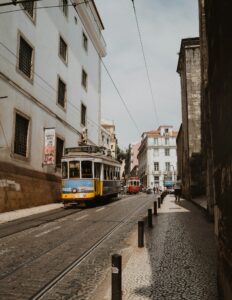
Lisbon gets hot in summer, but it has two advantages over most European cities: Atlantic coastal breezes that kick in by late afternoon, and a deeply embedded football culture. Portugal is in the tournament — and watching a Portugal match in Lisbon, even streamed from a café in Mouraria or a rooftop bar in Alfama, is an experience.
For nomads: Lisbon has one of the strongest digital nomad infrastructures in Europe. NomadX, Second Home, and dozens of independent coworking spaces are spread across the city. WiFi is reliable, the city is walkable, and the food and coffee scene is excellent. It’s not as cheap as it was three years ago, but it’s still meaningfully more affordable than London, Amsterdam, or Paris.
Why it works for the World Cup: If Portugal goes deep into the tournament (knockout stage runs from late June through July 19), the energy in Lisbon will be extraordinary. Even if you’re not Portuguese, being in a football-mad city during a World Cup run is something you won’t forget.
Best area to stay: Príncipe Real or Intendente — cooler microclimates than Alfama’s steep hills, great café density, good coworking access.
The “Flee the Continent Completely” Choice
You’re done. The heatwave broke you, your electricity bill from running the AC is offensive, and you’ve done the maths: you can live better in Southeast Asia or Latin America for less than your current rent. The World Cup streaming situation is the same anywhere with fast WiFi. So why suffer?
Here’s where to go.
3. Medellín, Colombia 🇨🇴
Nomad Score: 8.5 | Avg hotel: ~$30/night
Medellín sits at 1,495 metres above sea level, which gives it something genuinely rare: a climate so consistent that locals call it the City of Eternal Spring. Average daily temperature hovers around 22–24°C year-round. No heatwave. No humidity spike. Just comfortable working weather, every day.
For nomads: Medellín has gone through a remarkable transformation and is now one of Latin America’s strongest nomad hubs. El Poblado and Laureles are the two main nomad neighbourhoods — both packed with fast-WiFi cafés, coworking spaces, and affordable hotels. Your cost of living drops dramatically: a good hotel in Laureles runs $25–35/night, lunches cost $3–5, and a coworking day pass is typically $8–12.
Why it works for the World Cup: Colombia’s time zone (COT, UTC-5) means matches from the US kick off between 1pm and 6pm local time — perfect lunchtime and afternoon viewing. Most coworking spaces and café-bars will have screens up. If Colombia are in the tournament, the atmosphere will be unforgettable.
Best area to stay: Laureles — slightly calmer than El Poblado, better value, strong nomad community, excellent safety for the area.
→ See our full Medellín destination guide
4. Bali, Indonesia 🇮🇩
Nomad Score: 8.5 | Avg hotel: ~$28/night
Bali is the classic escape for a reason. Yes, it’s tropical — warm and humid — but it’s a completely different kind of heat to a European summer city with no airflow and 38°C pavements. In Canggu and Ubud, the nomad infrastructure is so mature that you’ll find cafés specifically designed for remote work: air-conditioned, reliable fibre WiFi, good coffee, and a community of people doing exactly what you’re doing.
The cost savings are significant. A comfortable hotel in Canggu with a pool runs $25–40/night. A full day of eating well — breakfast, lunch, dinner — costs $10–15. Your Bali budget for a month would cover maybe 10 days in a comparable European city.
Why it works for the World Cup: The time zone (WITA, UTC+8) means matches from North America stream in the early morning hours — 2am to 8am Bali time. This is the honest trade-off. If you’re a football obsessive, you’ll watch the big matches on a delay or set an alarm. Many Bali nomad cafés run World Cup streams for the big games regardless of local time.
Best area to stay: Canggu for the nomad infrastructure and beach access; Ubud if you want cooler temperatures (it sits higher and runs 3–4°C cooler than the coast).
→ See our full Bali destination guide
5. Chiang Mai, Thailand 🇹🇭
Nomad Score: 9.0 | Avg hotel: ~$25/night
Chiang Mai is the highest-rated destination on NomadStayHQ for a reason. It offers the best combination of low cost, strong WiFi infrastructure, and a genuine nomad community of any city in Asia. The Nimman Road area — Chiang Mai’s nomad heartland — has dozens of cafés with tested, reliable WiFi, and a culture that’s entirely comfortable with someone sitting with a laptop for four hours over one coffee.
The cost case is compelling: at $25/night average for a quality hotel, you’re spending less per night than a bad hostel in most European capitals. Factor in $2 street food, $5 restaurant meals, and $8–12/day coworking and you’re looking at a monthly all-in budget that’s hard to match anywhere in the world.
Why it works for the World Cup: Same time zone consideration as Bali (ICT, UTC+7) — matches stream late at night or early morning. But Chiang Mai has a large enough expat and nomad community that sports bars will be running screens for the knockout stages regardless of local time. The Night Bazaar area has several bars that specifically cater to this.
Best area to stay: Nimman Road for WiFi and coworking access; Canal Road for better value at similar quality.
→ See our full Chiang Mai destination guide
Quick Comparison: Which City is Right for You?
| City | Avg Hotel/Night | Nomad Score | Time Zone (vs ET) | Best For |
|---|---|---|---|---|
| Budapest | ~$35 | 8.0 | +6 hrs | European base, football atmosphere |
| Lisbon | ~$45 | 8.5 | +5 hrs | Atlantic breeze, Portugal WC run |
| Medellín | ~$30 | 8.5 | -5 hrs | Spring climate, afternoon matches |
| Bali | ~$28 | 8.5 | +13 hrs | Full escape, low cost, pool life |
| Chiang Mai | ~$25 | 9.0 | +12 hrs | Lowest cost, best nomad infra |
The Match Streaming Situation
Wherever you are, your best options for streaming matches legally:
- VPN + your home country broadcaster — most reliable, HD quality
- FIFA+ app — free in many markets, no subscription needed
- Local sports bars — every city on this list has them, and they’re worth it for the big knockout games
A reliable VPN (Mullvad or ProtonVPN are solid choices) is worth having regardless of where you end up. Hotel WiFi is fine for most streaming but have a mobile data backup for the semi-finals and final.
Ready to Book?
The World Cup final is July 19. You have time to be somewhere great for the knockout stages.
Compare hotels across all five cities →
We earn a small commission if you book through our links — at no extra cost to you. It’s how we keep this site free. Full disclosure here.

🌍 Free Download: Nomad City Cheatsheet 2026
Compare Chiang Mai, Bali, Lisbon, Budapest & Medellín — WiFi speeds, costs, visas and best months on one page.
Free forever. No spam. Unsubscribe anytime.
